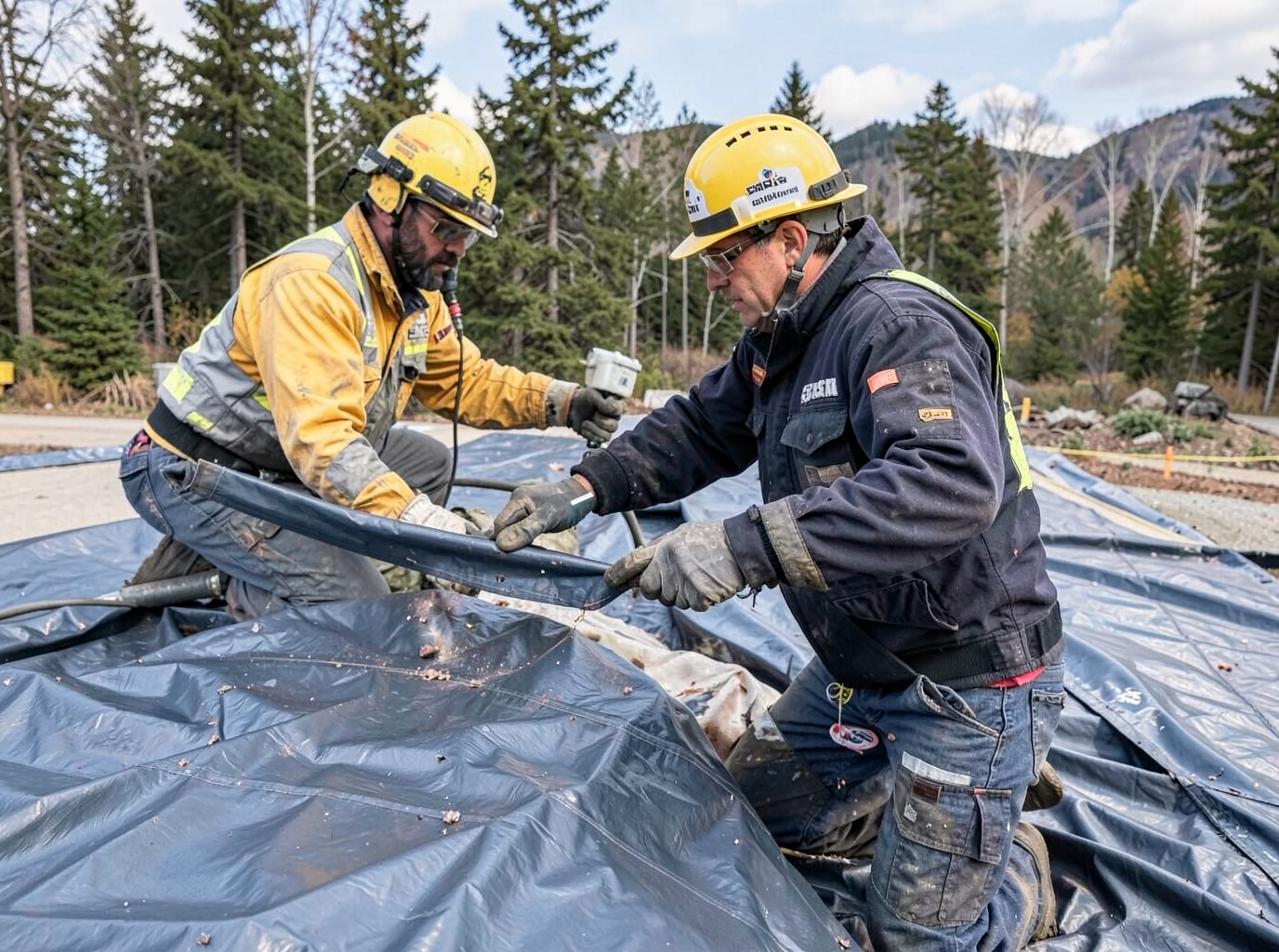
Coeur d'Alene winters bring heavy wet snow followed by freeze-thaw cycles that crack older asphalt shingles and split cedar shakes on homes built before 1980 in neighborhoods like Fort Grounds and the historic downtown district. When a leak appears during these swings, water can travel under the underlayment and saturate insulation within hours. Emergency tarping uses reinforced polyethylene sheets secured with furring strips and perimeter flashing to create a temporary watershed that diverts meltwater away from attic spaces and exterior walls.
Lake-effect winds off Coeur d'Alene Lake frequently gust above 40 mph in shoulder seasons, lifting loose flashing on ranch-style homes along the east side and in Hayden Lake subdivisions. A properly installed tarp must account for these loads by using additional battens and avoiding low-slope valleys where snow drifts form. Crews check for hidden rot in decking before covering because Kootenai County building standards require that any structural compromise be documented before a permanent roof permit is issued.
Tarps left longer than 30 days in this climate collect pine needles and ice, creating new leak paths at the edges. Homeowners in the Coeur d'Alene area are advised to schedule follow-up inspections after the first warm spell to confirm the tarp has not shifted and that no additional water has reached interior finishes.
Technician insight
In Coeur d'Alene the thing that catches most people out with Emergency Roof Tarping is how quickly wet snow from the lake turns into ice dams on north-facing slopes of 1960s–1970s homes in the Fort Grounds neighborhood. The ice lifts shingles that were already brittle from decades of freeze-thaw cycles, so a tarp that looks secure in the afternoon can shift overnight if the battens are not set into the existing drip edge.
Wind-driven leak after November storm
A cedar-shake home near Sanders Beach lost several courses of shingles during a lake wind event. Water reached the living room ceiling within hours. We installed a reinforced tarp over the ridge and sealed the lower edge into the gutter line. The homeowner avoided further interior damage until permanent cedar replacement could be scheduled after the first freeze.
Emergency Roof Tarping Services We Offer
✓Storm Damage Tarping
Immediate covering of wind-lifted shingles and hail-damaged sections on Coeur d'Alene homes to prevent interior water damage during spring storms.
✓Snow Load Emergency Covering
Quick placement of heavy-duty tarps over sagging roof sections after heavy snowfall events common in the Coeur d'Alene area to reduce further structural stress.
✓Leak Isolation Tarping
Targeted tarping around specific penetrations such as chimneys and skylights on older homes near Lake Coeur d'Alene to stop active drips into living spaces.
✓High-Wind Secure Tarping
Reinforced perimeter fastening on exposed slopes facing Coeur d'Alene Lake to keep tarps in place during gusts that routinely exceed 35 mph.
✓Post-Fire Roof Protection
Temporary covering of fire-damaged decking on homes in rural Kootenai County areas to block rain while insurance assessments are completed.
Emergency Roof Tarping Cost in Coeur d'Alene, ID
| Service | Typical Range | What Affects It |
|---|---|---|
| Small section tarp (under 200 sq ft) | $350–$650 | Single-story homes with easy ladder access |
| Medium section tarp (200–400 sq ft) | $650–$1,100 | Two-story homes or steeper pitches near the lake |
| Large or multi-area tarping | $1,100–$1,800 | Complex rooflines or snow-load conditions |
| Tarp removal and disposal | $150–$300 | When permanent repairs are completed |
Ranges are typical for Coeur d'Alene, ID and confirmed with an exact written quote before any work starts.
How it works
- 1
Initial Assessment
Inspect the roof from the ground and attic to locate active leaks and assess decking condition before any tarp work begins.
- 2
Site Protection Setup
Lay ground protection and stage materials to avoid damaging landscaping around Coeur d'Alene homes with mature trees.
- 3
Tarp Installation
Roll out reinforced sheeting, secure with wood battens, and seal edges to create positive drainage away from walls and windows.
- 4
Final Walk-Through
Check attic for new moisture, confirm tarp tension, and provide the homeowner with a timeline for permanent repair scheduling.
Pricing
Most emergency tarps in the Coeur d'Alene area fall between a few hundred and low thousands depending on roof pitch, access, and material size.