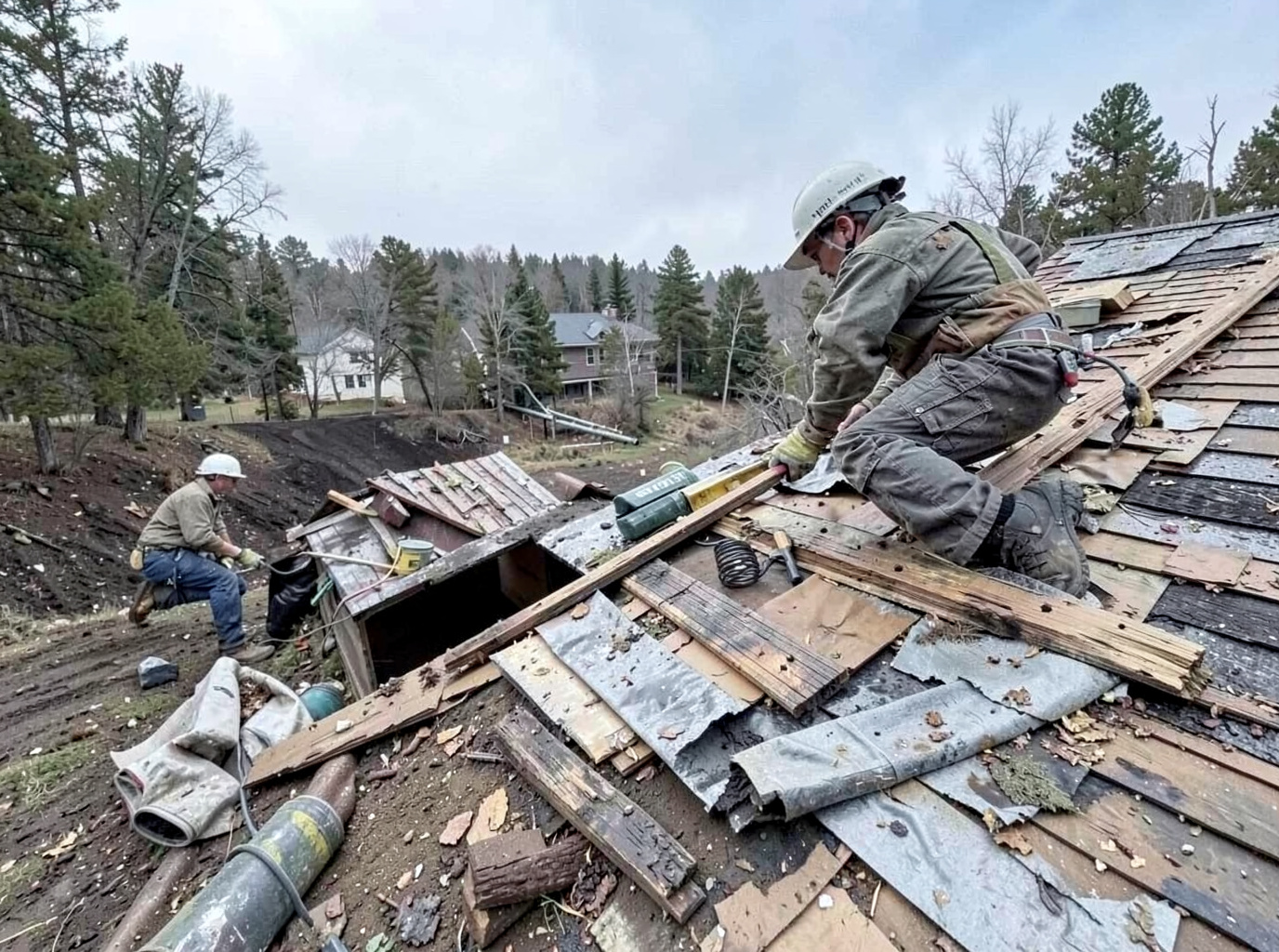
Coeur d'Alene winters bring repeated freeze-thaw cycles and sudden wind gusts off the lake that lift shingles and drive water under flashing on homes built from the 1960s through the 1990s. These older roofs often have single-layer asphalt shingles over skip sheathing, so storm damage frequently shows up first at ridge vents and valley flashings rather than obvious holes. A proper repair starts with removing only the affected courses, checking for hidden rot in the decking, and matching the remaining shingles so the patch does not telegraph after the next snow load.
Wind-driven rain is the most common claim trigger in the Coeur d'Alene area because the lake creates localized gusts that exceed county design loads on east-facing slopes. When water gets past the underlayment it pools at the eaves and soaks insulation in the attic, which is why we always pull a few courses at the bottom edge even when the visible damage is higher up. We carry extra step flashing and ice-and-water membrane on every truck because the 2:12 to 4:12 pitches common on ranch houses here make standard felt underlayment insufficient once the wind picks up.
Hail events are less frequent but hit harder on the south and west exposures where granules are already worn from summer UV. We map every impact crater with a chalk grid before writing the scope so insurance adjusters see the difference between cosmetic granule loss and actual mat fractures. Repairs in these cases usually require full-course replacement rather than spot patches because mismatched shingles weather at different rates and become visible within two seasons.
After any storm we document the existing ventilation and insulation depth because adding storm-related repairs without restoring airflow can create ice dams the following winter. Homeowners in the Sanders Beach and Fort Grounds neighborhoods see this problem most often because the mature tree cover keeps roofs shaded longer and slows drying after a leak.
Technician insight
In Coeur d'Alene the thing that catches most people out with storm damage roof repair is the way lake-effect wind funnels between the hills and lifts the bottom three courses on east-facing roofs first. Homeowners often miss it until the next freeze-thaw cycle pushes water into the soffits.
Wind-driven leak on a 1978 ranch near Sanders Beach
After a November wind event the homeowner noticed water stains along the east eave. We found lifted shingles and torn step flashing where the roof met a dormer. We replaced the bottom four courses, added new ice-and-water membrane, and reinstalled matching shingles so the patch blends with the remaining roof.
Storm Damage Roof Repair Services We Offer
✓Wind Uplift Shingle Replacement
Removes lifted courses, inspects decking for hidden moisture, and reinstalls matching shingles with upgraded fasteners rated for local wind zones.
✓Hail Impact Assessment and Repair
Maps granule loss and mat fractures then replaces damaged sections while preserving surrounding roof life expectancy.
✓Ice Dam and Snow Load Repairs
Clears compacted snow, replaces saturated underlayment, and adds ice-and-water membrane at eaves where freeze-thaw cycles are worst.
✓Valley and Flashing Storm Leaks
Opens valleys and step flashings, replaces damaged metal, and reseals with high-temperature membrane to stop wind-driven rain entry.
✓Ridge Vent and Soffit Storm Damage
Repairs or replaces vent sections torn by wind, restores intake and exhaust balance, and prevents attic moisture after heavy rain events.
Storm Damage Roof Repair Cost in Coeur d'Alene, ID
| Service | Typical Range | What Affects It |
|---|---|---|
| Minor wind uplift repair (one slope section) | $450–$950 | Single-story access, no deck replacement |
| Hail section replacement (two courses) | $800–$1,600 | Includes underlayment and flashing work |
| Ice dam leak repair with membrane | $650–$1,400 | Eave work on 4:12 or lower pitch |
| Valley flashing and leak stop | $550–$1,100 | Metal replacement plus membrane tie-in |
Ranges are typical for Coeur d'Alene, ID and confirmed with an exact written quote before any work starts.
How it works
- 1
On-Site Storm Assessment
We walk the entire roof, mark every damaged course, and check attic insulation and sheathing for hidden water.
- 2
Scope And Material Match
We photograph existing shingles, locate matching stock or approved alternatives, and note any ventilation or insulation issues that must be corrected.
- 3
Targeted Removal And Deck Repair
Only damaged sections are removed; rotted decking is replaced and the area is dried before new underlayment goes down.
- 4
Reinstallation And Final Walk
New shingles and flashings are installed, fasteners are checked, and the homeowner receives a written summary of what was replaced.
Pricing
Upfront written quotes after inspection; final price depends on extent of hidden deck damage and material availability.